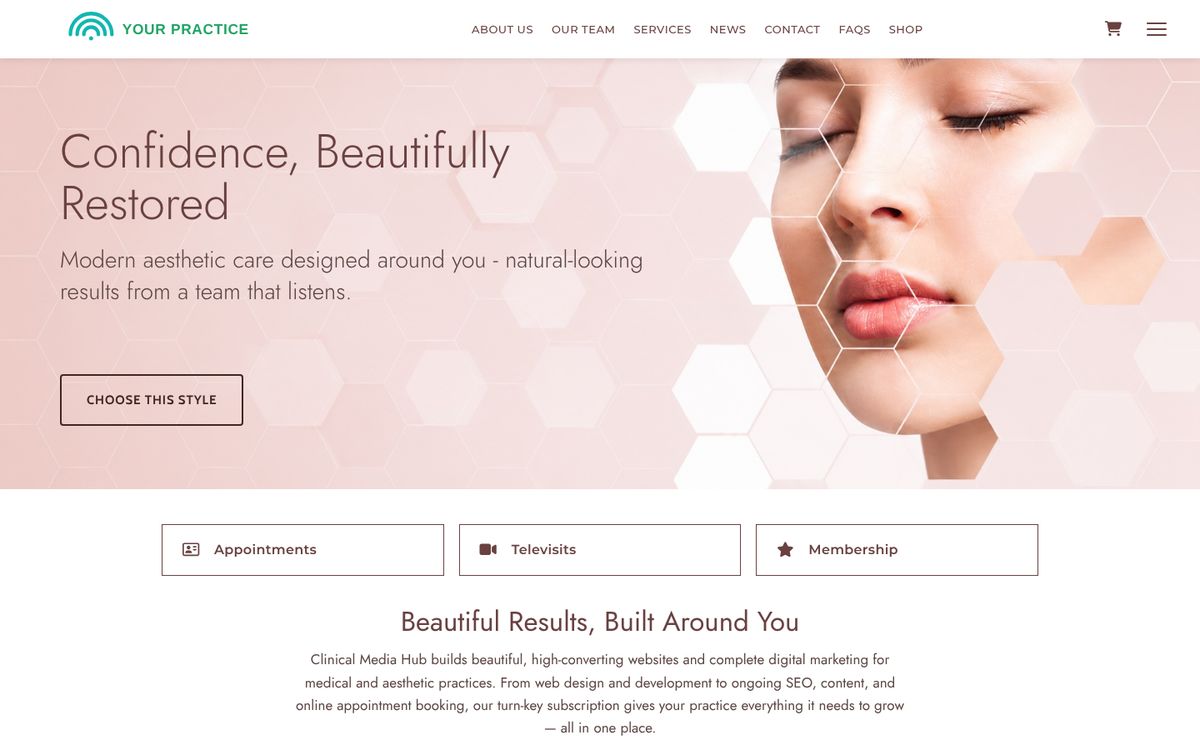
If you are opening a med spa, you are in good company: AmSpa counted 10,488 med spas in its 2024 State of the Industry report, up from 8,899 the year before, and 18% of them had opened within the year. Most are owner-run — 81% are single-location businesses. The new ones that fill their schedules quickly tend to get the same things right before opening day. Here is the website and patient-data checklist, in the order you will need it.
Short answer: before you open, have a live website with your treatment menu and a consultation request on every page, a Google Business Profile that matches it, intake and photo-consent forms ready to send, a host that will sign a Business Associate Agreement if you collect health information, and a plan for asking every happy client for a review from week one.
Before you open: the website goes live first
Clients will look you up before your doors open — from a grand-opening post, a friend's referral or a map search. A page that says “coming soon” loses them. Aim for a site that is live four to six weeks before opening with five things on it: who you are and who supervises treatments, the treatment menu, prices or price ranges, a consultation request form, and your opening date with an offer to book ahead.
Write the treatment menu in the words clients search — “lip filler”, “laser hair removal”, “microneedling” — one page or section per treatment, because those pages are what Google ranks for “[treatment] near me”. Our guide to what a med spa website needs in 2026 goes through each element.
Booking: requests on day one, automation later
You do not need a fully automated calendar to open. A request flow — the client picks a treatment and a preferred time, your front desk confirms — captures demand without overbooking a schedule you are still learning. What matters is that the request is reachable from every page. On Clinical Media Hub's Growth and Complete plans, clients request injectables, laser treatments or facials from your site and your team confirms in the dashboard.
Forms: intake, consent and photo release before the first client
Three forms need to exist before anyone is treated: a health-history intake, a treatment consent, and a photo and media release. The last one is the one new owners forget, and it is the one that matters for marketing. If your practice is covered by HIPAA, using a client's photo to market your services is a marketing use of protected health information and needs the client's prior written authorization (45 CFR 164.508). Even where HIPAA does not apply, state boards and consumer-protection rules expect written consent and honest, unaltered images.
Have your attorney finalise the wording; your website's job is to deliver the forms securely and keep the signed copies. On Clinical Media Hub, patient forms run on HIPAA-aware infrastructure, each form starts switched off until you have reviewed its wording, and the photo/video/media release is part of the Complete plan's form library.
Patient data: decide where it lives before you collect any
Whether HIPAA applies to your med spa depends on how you operate and bill — a question for your attorney, not your web designer. Plan as if it might: the moment your website collects health history or consultation requests with medical detail, that data should sit on HIPAA-aware infrastructure with a signed Business Associate Agreement from the vendor. No vendor can certify your practice — HHS certifies no one — but a vendor that will not sign a BAA is one to avoid. What HIPAA-aware hosting really means explains the difference. Some states add their own rules on top of HIPAA, so ask your attorney about yours.
Local search: your Business Profile and your first reviews
Your Google Business Profile is the largest single group of local ranking signals, and reviews are the next (BrightLocal and Whitespark, 2026). Claim the profile as soon as you have an address, choose the right primary category, add photos, and make sure the name, address, phone and hours match your website exactly. Then ask for reviews from the first week: 84% of patients check online reviews before choosing a provider (rater8, survey of 1,008 U.S. patients), and many consumers want to see at least 20 reviews before they will consider a business (BrightLocal, 2026). When you reply, never confirm that the reviewer is a client or mention a treatment — our local SEO data guide has the safe reply pattern.
After opening: build for the second visit
AmSpa's 2024 report found that 73% of med spa patients are repeat patients, and the average visit was $527. The business is built on the second, third and fourth visit, so the website keeps working after opening day: a monthly post about seasonal treatments, a membership page if you offer one, and social posts that keep you in front of clients between appointments. Organic Instagram and Facebook do that job well — see growing your practice with organic Facebook and Instagram. Clinical Media Hub drafts posts and articles for you and publishes them only after you approve them.
What it should cost
AmSpa's 2024 report puts average med spa revenue at about $1.4 million, and the association's own guidance cites marketing at about 7% of revenue on average. Your website and its tools should be a small, predictable slice of that. Clinical Media Hub plans start at $179/month billed annually, with a 7-day free trial, no setup fee, and a BAA on every plan; your site is set up automatically after checkout, usually within a couple of hours.
Opening checklist: site live 4–6 weeks before opening · one page per treatment, with prices · consultation request on every page · intake, consent and photo-release forms reviewed by counsel · HIPAA-aware hosting with a signed BAA · Google Business Profile claimed and matching the site · review requests from week one · one new post a month.
See it on a design built for aesthetics practices: websites and marketing for med spas, or compare plans.
Frequently asked questions
When should a new med spa's website go live?
Four to six weeks before opening, with the treatment menu, prices or ranges, a consultation request form and the opening date, so early interest turns into booked consultations.
Which forms does a new med spa need before the first client?
A health-history intake, a treatment consent and a photo and media release. Have counsel finalise the wording; deliver and store the signed forms securely.
Does HIPAA apply to my med spa?
It depends on how your practice operates and bills — ask your attorney. If your website collects health information, use HIPAA-aware hosting with a signed Business Associate Agreement either way.
How many reviews does a new med spa need?
Start asking from week one. Many consumers want at least 20 reviews before they will consider a business, and most patients read reviews before choosing a provider.
Sources: American Med Spa Association, 2024 Medical Spa State of the Industry Executive Report Recap; AmSpa, “How Much Should I Spend on Med Spa Marketing?” (2025); eCFR 45 CFR 164.508; BrightLocal & Whitespark Local Search Ranking Factors 2026; BrightLocal Local Consumer Review Survey 2026; rater8, “How Patients Choose Their Doctors” (1,008 U.S. patients, Dec 2024). Plan facts as published at clinicalmediahub.com/plans.
Ready to grow your practice's online presence? Explore plans and start your 7-day free trial.